

When someone shows you who they are, believe them the first time. — Maya Angelou
Sadly, I recently had occasion to follow Ms. Angelou’s excellent advice.
“I’m Done.”
Someone I know shared with me how she and her husband were going to back date a document and have the husband’s elderly father—who had already been legally declared incompetent—sign it so they could put a used vehicle they’d gifted him back into their names and sell it.
The net result of such a plan: the old man would more quickly spend down his remaining (and limited) assets, becoming eligible for state Medicaid earlier than he should. Medicaid would then cover the full cost of his care. Meanwhile, proceeds from the car (a few thousand) go into their bank account. And trust me, they don’t need the money; they’re wealthy.
The first time I heard the wife describe this scheme, yet to be enacted, I pointed out that it would be Medicaid fraud. She knows I’m a retired attorney. She’s well-educated herself. Throughout my family law career, I saw people trying many ways to accomplish keeping money for themselves rather than seeing it go to the government for the care of their relatives. I hoped my dismay with their plan would cause this couple to reconsider and not go forward with their scheme, which also involved a breach of the husband’s fiduciary duty to his father under a durable power of attorney.
When I saw the wife ten days later, she gleefully reported they’d sold the car. She confirmed they’d followed their plan, getting the (legally incompetent) old man to sign the back-dated document gifting the car back to them. She claimed they were simply following the advice of someone within the Medicaid office “…who’s worked there for 30 years.” Even if that were true, which I doubt, that doesn’t change the illegality of what they did.
I was tempted to ask the wife, “If that worker told you to jump off a bridge to retain a few thousand dollars, would you do it?”
As before, I told the wife what they’d done was illegal, was in fact Medicaid fraud, but this time with my voice raised, betraying my disgust that they’d pursued that route. I mean, these are people who regularly profess their deep Christian faith and values! I pointed out that, besides the government clawing back the value of the car, or declining Medicaid coverage for the old man’s care for a period to cover that amount and potentially jeopardizing his placement, the couple themselves faced possible federal criminal and/or civil charges and penalties, both monetary and imprisonment.
“I don’t care,” the wife responded. “We’ve paid thousands for that man….” I cut her off. I’d heard enough. She had no remorse. I said, “I’m done,” and walked back toward my house.
As I walked away, she asked, “Are you mad at me?” I turned to face her and said, “I’m not mad. I’m disappointed.”
Let me be clear: these people didn’t find a legal loophole to exploit. They knowingly committed fraud. So, when I said, “I’m done,” I meant it.
The Door Slam
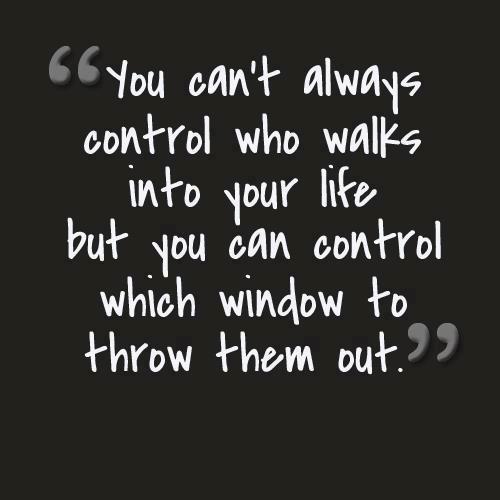
I immediately performed what is often called the INFJ door slam: I cut all contact, including social media. (INFJ is one of the Myers-Briggs Type Indicators (MBTI®). The letters stand for Introverted, Intuitive, Feeling, and Judging. Such types are often called the Advocate or the Counselor, which fits me and my former legal career to a T.)
The door slam is, for me, a firm psychological boundary. It’s not petty revenge. It protects my mental health, energy, and peace after reaching my limit. To the recipient, it looks abrupt and shocking, but it’s never a snap decision. It follows a period of giving second and more chances, feeling keen disappointment in someone’s actions, and silently reducing my emotional investment. Here, the fraud incident was the last straw.
When I slam my door, I set aside previous empathy and caring and become completely indifferent. I’m not angry and I don’t hate. The recipient is simply no longer a welcome part of my life. The older I get, the more averse to drama I become and the easier it is to slam that door.
A Lesson About Reputation
After the door slam, though, I wondered: Why am I so bothered by the behavior of this couple? It’s illegal, yes. It unfairly shifts a financial burden from them to taxpayers, yes. But I can’t control what they do. They are not my responsibility.
The answer: By not slamming the door on them, I’m putting my reputation at risk.
My father always made a huge deal about protecting one’s reputation. He showed me that through his own actions and beliefs. We often talked about the importance of reputation and how easily it’s damaged if one isn’t careful.
An early lesson came to mind.
It was my first year of high school. Football season. A date, David, was going to take me to the game, but there was a problem: he was 19, and I was only fifteen. He and I met through our parents; his father went to high school with my mother. They visited our house. Afterward, David called and asked me out. My parents said no, he’s too old. But David was persistent. We hatched a plan: I would say I was going to the football game with my friend Jean. My parents would drop me off at her house on their way to a night out. David would pick me and Jean up, and we’d go to the game.
When I arrived at Jean’s house, she asked a favor: her older sister’s boyfriend (college age) wanted Jean to sell some of his marijuana at the game. Was it okay if she brought it with us? I didn’t want to appear judgmental, even though I had zero interest in trying marijuana, so I asked David. He said it was fine.
While David and I sat in the bleachers watching the game, Jean—who had left the baggie of marijuana in the glove box of David’s truck—found a buyer. She came and got me and David to walk back to the truck to get the weed. Well (as you may already have guessed), Jean sold it to an undercover police officer, who promptly arrested all three of us.
I’d never seen the inside of a jail cell. I was scared shitless. I hope I never see one again.
My parents were still out for the evening, so when the police called them to collect me, there was no answer. Instead, they released me to Jean’s father, who picked us up. (Because David was an adult, he was jailed overnight.) Jean’s father was angry, so much so I feared Jean might get a beating later. On the drive to their house, her father insisted it must all be my fault because I was with that boy. Jean, protecting her older sister, tried to take the blame, but her father wouldn’t listen.
I had to sit with Jean in her room for nearly an hour before her parents reached mine by phone. It was nearly midnight.
There was a knock on their door. I heard Jean’s father open it. I was already racing up the stairs, wanting badly to get out of there. As I got to the door, Jean’s father was telling my father this was all my fault because it was my friend who had the marijuana. (That wasn’t true; it belonged to Jean’s sister’s boyfriend, but hey, let’s not let facts get in the way.) I feared my father might believe him. Instead, my father put up a hand, cut Jean’s father off, looked directly at me and said, “Ready to go home?” I nearly fell against him in my rush to get out to our car.
On the long drive home, feeling utterly ashamed, Dad calmly asked me to tell him what happened. I shared the entire story, telling the truth. He listened, accepted it, and turned the experience into a lesson about not following someone else’s lead when I know it’s wrong. He said that could get me in trouble, guilt by association. Instead, I should stand up for myself and insist on doing the right thing, always.
Once home, Dad gave me some advice: Don’t talk about the arrest with my friends at school. “It will tarnish your good reputation.” He was emphatic about this, so I did as he wished and never mentioned the incident at school. After meeting with a social worker—my parents sitting beside me—and through tears assuring her I would never do something like that again, there were no charges filed against me and no juvenile record.
My Reputation is Not for Sale
Character and integrity are key elements of reputation, as are trust, consistency, transparency, accountability, and expertise.
As I grew into adulthood, I paid attention to people’s actions. Who did I admire, and why? Who did I think was an idiot, behaving badly, even illegally? I was observing and reading their character, gleaning insight into their reputation.
As an attorney, my focus on reputation strengthened. Not just my own reputation, which I guarded fiercely, but those of attorneys I encountered, their clients, even the judges hearing cases. I knew which attorneys had poor reputations, and observed how judges reacted differently to them, even toward their clients. Judges didn’t trust them. I never wanted that to happen to me.
As a guardian ad litem, I had a heightened duty to the court for honesty and integrity. Not only was I a “mandatory reporter” if I learned of child or elder abuse, but as “the ears and eyes of the court” judges relied heavily on the information I uncovered during my investigations, the facts I put forth in my reports, and my recommendations for how the court should rule in a case. It was a heavy responsibility, and I was fastidious in performing those duties precisely and honorably.
It’s easy today to justify poor and/or dishonest behavior by pointing fingers, e.g. at politicians, especially our current president and his family. Easy to say, “Everyone else is doing it and getting away with it. Profiting, even! Why shouldn’t I?”
I couldn’t live with myself if I adopted such an attitude.
In response to such justifications I would ask: What is your reputation worth? What are you willing to sell it for?
For the couple who committed Medicaid fraud, the answer is a few thousand dollars.
It takes many good deeds to build a good reputation, and only one bad one to lose it. — Benjamin Franklin
A good reputation is more valuable than money. — Publilius Syrus
If I take care of my character, my reputation will take care of me. — Dwight L. Moody
My decision to slam the door on them was not just because they violated my sense of right and wrong, crossing what is, to me at least, a bright and obvious line. I’m also protecting my excellent reputation from their bad one. I don’t want to be seen by others as complicit in their actions by remaining socially entangled. I won’t allow them to drag me down with them, to steal any of the goodwill I’ve worked hard to create over a lifetime of carefully cultivating my reputation for integrity, honesty, and good moral character.
Associate with men of good quality if you esteem your own reputation; for it is better to be alone than in bad company. — George Washington
And finally, my favorite quote:
One can survive everything, nowadays, except death, and live down everything except a good reputation. — Oscar Wilde