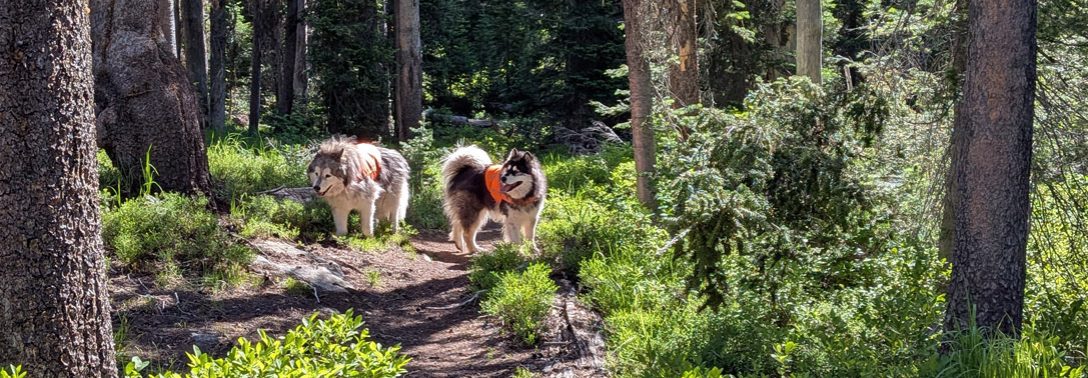
Not long after I moved back to Idaho in December 2024, a new neighbor briefly introduced herself from her truck when she saw me walking Conall on our road. The next time that neighbor saw me, she stopped to explain that an older couple living nearby had a 27-year-old Arabian stallion in a small barn on their property. Not unusual, as many of the neighbors have barns and horses.
What was unusual was that I’d noticed vehicles driving up to that barn every day, staying maybe 30 minutes before leaving. The neighbor explained that she and another neighbor feed the horse and clean his stall because the couple who owned him have health challenges and couldn’t care for him themselves.
“Can’t the horse go live with someone else, where he can be cared for and maybe have freedom to move about in a pasture?” I asked.
The neighbor responded that the husband wouldn’t let the horse live elsewhere, saying he was too attached and couldn’t bear to be separated from his horse.
The first four months after I moved in, I never saw that horse. As far as I knew, it never left the confines of its small metal barn. Once, walking on the road with Conall, I heard him snort from inside the barn but couldn’t see him. I had no clue what the horse looked like. There was a small space on the side of the barn, beyond a stall door and surrounded by metal fencing sections, but with snow on the ground, the horse never ventured out. The lower half of the stall door remained closed, blocked by snow. No one took him out of the barn, even for short walks on the plowed road.
The neighbor felt conflicted about the situation, having horses of her own, but believed the best she could do was make sure the horse was fed, watered, and given some affection. She usually had a bag of carrots and an apple or two in hand when I saw her visit the barn.
One evening in March, I noticed that the sliding door of the neighbor’s house was open a few inches despite the bitter cold of winter. They both poked their heads out and were talking to the horse in its barn, some 30 feet away. It was a touching scene, but also incredibly sad.
Then, in early April, the neighbor told me the man was going to have a procedure done in the hospital, but his prognosis wasn’t great. The horse was also in poor condition, and she didn’t know how much longer he had.
A few days later, the other neighbor who helped feed and water the horse saw me out walking Conall and told me the husband was home from the hospital and seemed better, but still quite frail.
A couple of days after that, the second horse-caring neighbor dropped by. She’d never come to my house before. She wanted to let me know a vet was going to come by that afternoon between 5 and 6 pm to put the horse down.
I had already figured the horse’s life was nearing its end because I’d noticed a tractor out in the owners’ field the day before, pushing snow away from a small area of ground and plowing a path from there back to the barn. The second neighbor worried the horse might not be able to walk from barn to grave.
Around 5 pm that afternoon the same tractor returned and started digging the horse’s grave.
Several people I didn’t recognize were hanging around the barn, likely from the veterinary clinic. I decided I wanted to at least see the horse but not witness its death. I watched discreetly through binoculars.
Around 6:10 pm, several people started walking the horse from the barn, a simple halter on its head. What a handsome animal! All white, he held his head and tail high, almost prancing in the snow, slipping a bit but otherwise appearing healthy and happy to be outside.
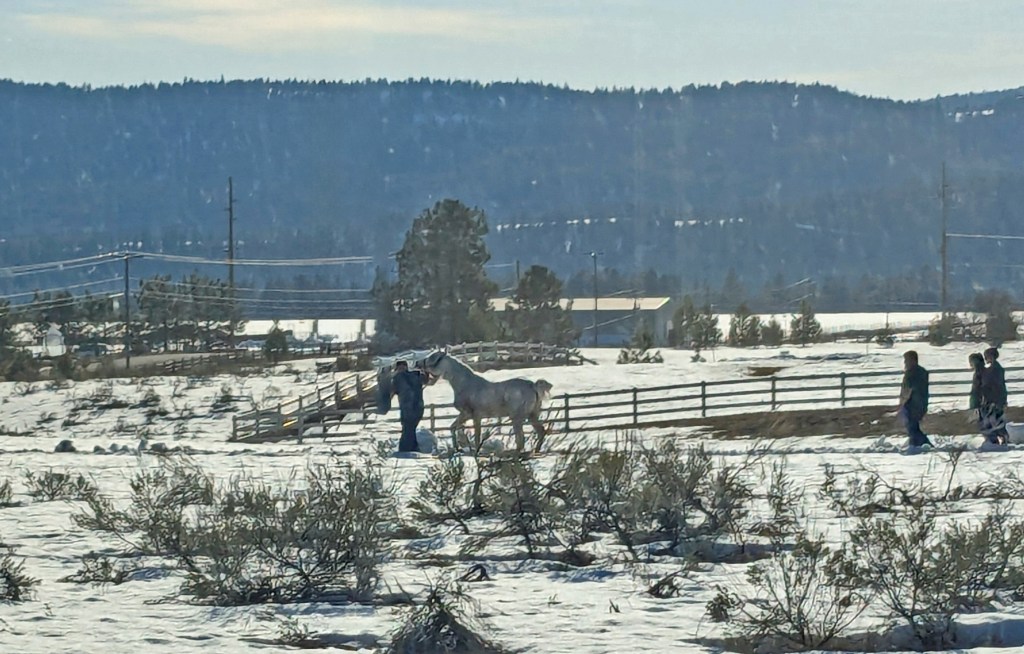
It was heartbreaking to watch. Was he truly as far gone as the care-giving neighbors thought? Maybe all he needed was getting out of that barn, feeling the sun on his coat and the wind in his mane. To smell all the scents and move about freely.
I don’t know. I love horses and have ridden many times over the years, but I’ve never owned one or been responsible for one’s daily care.
Who am I to judge?
Even though I felt compassion for the horse—restricted to a small barn, never seeing the sun or moon overhead, visited briefly twice each day by caretakers but otherwise always alone, unable to interact with his primary humans—I also felt a sense of relief that his confinement and suffering were ending.
“You’ll be free. Stardust again,” I whispered as I watched him walk on the snow toward his grave.
I don’t know what overcame me, why I felt such a sharp pang of grief, even anger, for an animal I’d never seen or interacted with, but there it was. I think it was my powerful sense that the horse would have enjoyed a good quality of life, maybe even for a few more years, but for its humans’ desire to keep him close even when they were too frail to interact with him in any meaningful way for months if not years.
As the horse and people surrounding him neared the grave, I left my viewpoint. I couldn’t keep watching.
Within a couple of minutes, both my dogs started barking and howling inside my house. Chann figured out he could just see the people and the horse through a window, but Conall couldn’t see them. I tried to interpret the boys’ vocalizations. Partly they were alerting me to strange sounds and smells, including the people and horse, but I honestly believe another part was them sensing the horse’s physical and emotional distress.
Maybe the boys saw or heard the horse collapse to the ground. Or sensed its anxiety when it saw its grave. Maybe the boys were aware of people struggling to keep the horse calm, or to maneuver him into the grave. I don’t know. I’ve never seen a horse put down, a process so different from our dogs because of the horse’s size.
But clearly the boys were upset. So was I.
After the people left, I heard the tractor start up again, filling the grave.
The scene, both what I observed and what I imagined, played in my head all that night. I couldn’t sleep as I wondered what I might have done differently in similar circumstances. I relived having to say goodbye to my Aussie, Finn, just five months earlier, right before moving from Vermont back to Idaho. He was two weeks shy of his 17th birthday, outliving any of my dogs by nearly three years.
Over the previous couple of years, Finn lost first his hearing, then his vision, and finally, in the last few weeks of his life, his sense of smell. It was the loss of that last sense that made it impossible for Finn to continue to independently navigate his world. He’d get lost in corners, and I’d have to redirect him. Or he couldn’t find me, or Conall or Chann, because he could no longer smell us. He bumped into things. He’d cry loudly from the yard because he’d get confused and lost and couldn’t find his way to the steps leading back inside. Yet Finn still loved going for a walk every day. He didn’t care that he quickly tired and those walks got progressively shorter. He just wanted to go and got excited every time, especially if there was snow on the ground and Conall joined us. If I took his leash off during these walks, Finn wouldn’t move; he needed the connection to me that the leash provided to feel safe.
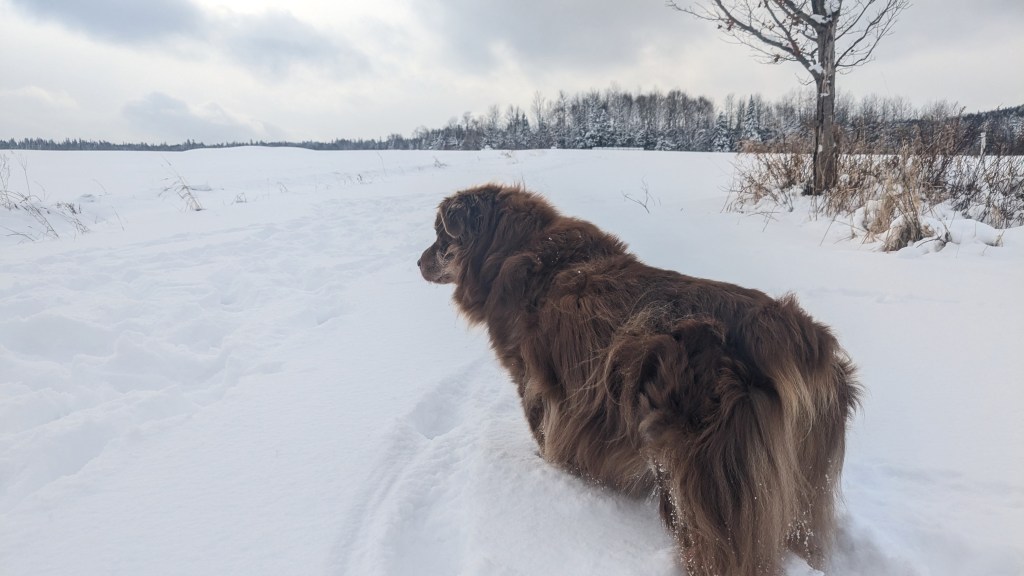
I did everything I could to ensure Finn’s quality of life remained good until, ultimately, nothing worked to assuage his anxiety after losing all his senses. He slept a lot but often woke up panting in the middle of the night as if he were in pain, despite me increasing the dose of his anti-inflammatory. That’s when I made the difficult, horrible decision to arrange for a vet to come to the house and let Finn go peacefully and painlessly. As he took his last breaths, I stroked the silky strands of fur on his ears, my tears falling as I told him I loved him one last time.
No matter how many dogs I’ve said a last goodbye to throughout my life, it never gets easier.
It has been a year since I saw that handsome horse for the first time on what turned out to be his last day alive. I think of him often. I have compassion for the couple who owned and cared for him. As I’ve gotten to know them since, I can see they’re good people. They did the best they knew how to do with the resources they had.
My thinking about the horse’s final months boils down to this lesson: I hope I never become so focused on my own wishes that I turn a blind eye to the suffering of one of my animals or restrict their freedom so extremely because of my own frailties and desire to keep them with me as long as possible.
Sometimes the best choice for a pet whose care we’re responsible for is the one that’s the hardest for us to make: to let them go, whether to a better home or to facilitate the compassionate ending of their life, even when we’re not ready to say that most difficult goodbye.
As one wise vet told me long ago, “Better a day too early than a day too late.”
Feature image: white horse running in a field at sunset, pngtree.com.

 Wild Sensibility