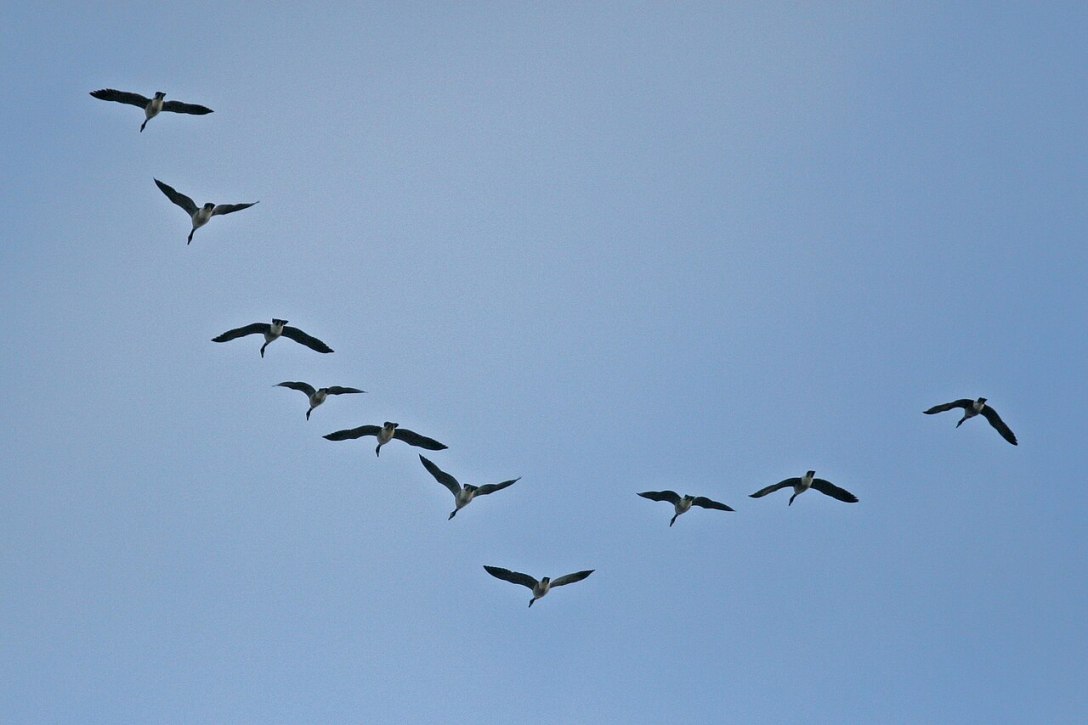
I saw the coolest thing when I stepped outside one recent morning: ten V formations of Canada geese flying north over the valley, each V drafting closely off the one in front of it. All of them honking. I’m guessing there were several hundred of them in the full compliment. Sadly, I didn’t have my phone for a photo or video.
Their V formations undulated a bit, and I’m sure over the vast distances they cover from winter to summer grounds, the lead V drops back and lets the next pull, and so on.
The geese fly in a V formation to conserve energy and increase efficiency during long migrations, extending their flying range by up to 70%. The formation reduces wind resistance, allowing each bird to utilize the updraft created by the leader and those ahead in line. It also aids communication, keeping the flock together.
Each goose flies slightly above and to the side of the bird in front, riding in the “upwash” (small updraft) of the leaders’ wings, which reduces drag. Whenever a goose leaves the formation, it quickly feels the increased drag and moves back into the V to benefit from the group’s effort.
Because the lead bird faces the highest wind resistance, the geese within the V formation rotate leadership to avoid exhaustion.
The formation also makes it easier for members of the wedge (one name for a flock of geese in flight; others are a skein and a team) to stay in visual contact, coordinate movement, and keep together over long distances. And all those eyeballs in proximity allow for better surveillance against predators because the birds can see in multiple directions.
Which is all rather like what I remember when cycling STP (Seattle-to-Portland) in one day, back in the day. I would attached myself to the back of a bunch of studly men riding in a line, drafting off their pace, which was much faster than I could do on my own (like, 22-24mph vs 17mph). When the lead guy dropped back, I’d let him move into line just ahead of me so I never had to lead, staying always at the back. If one bike broke down, the entire line would stop to help, keeping the group together. And collectively we would shout warnings of cars approaching from behind or the sides, keeping all of us safer.
Because there were rest stops along the way, I frequently had to find new draft lines after those breaks. The guys in the draft lines I joined almost always accepted this arrangement, knowing I’d never be able to sustain a lead pace like theirs, so why bother making me work my way up through the line to lead? I was just a nameless female taking advantage of the drafting they created. They understood. This strategy always got me to Portland (a nearly 200-mile ride) in good time and shape.
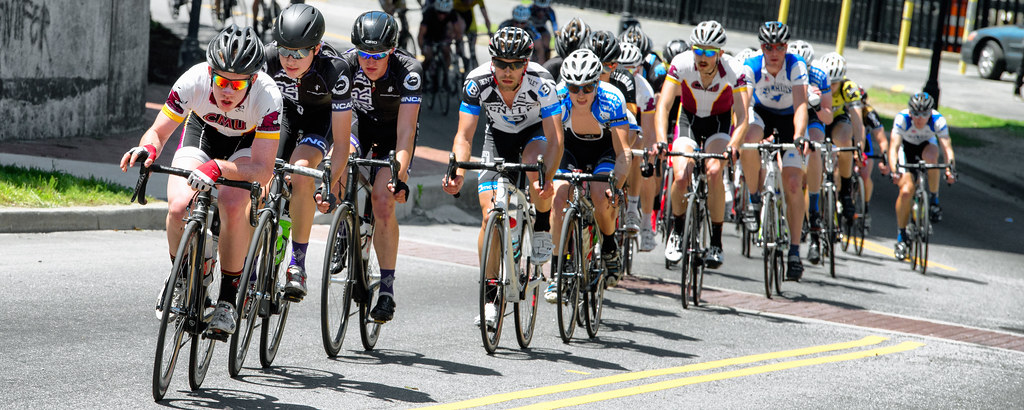
That cycling draft line strategy is identical to that of wedges of geese in V formation who will reach their summer breeding grounds together, in good shape, most all sharing the load except the weakest (like me on my bike in the draft lines) getting a pass.
Feature photo: Canada geese flying in V formation. Creative Commons Attribution 2.0.

 Wild Sensibility